
In our last post, we discussed regenerative agriculture : what it is and why it's important. Today, we'll explore how this is directly reflected in our name, Wild Orchard Green Tea.
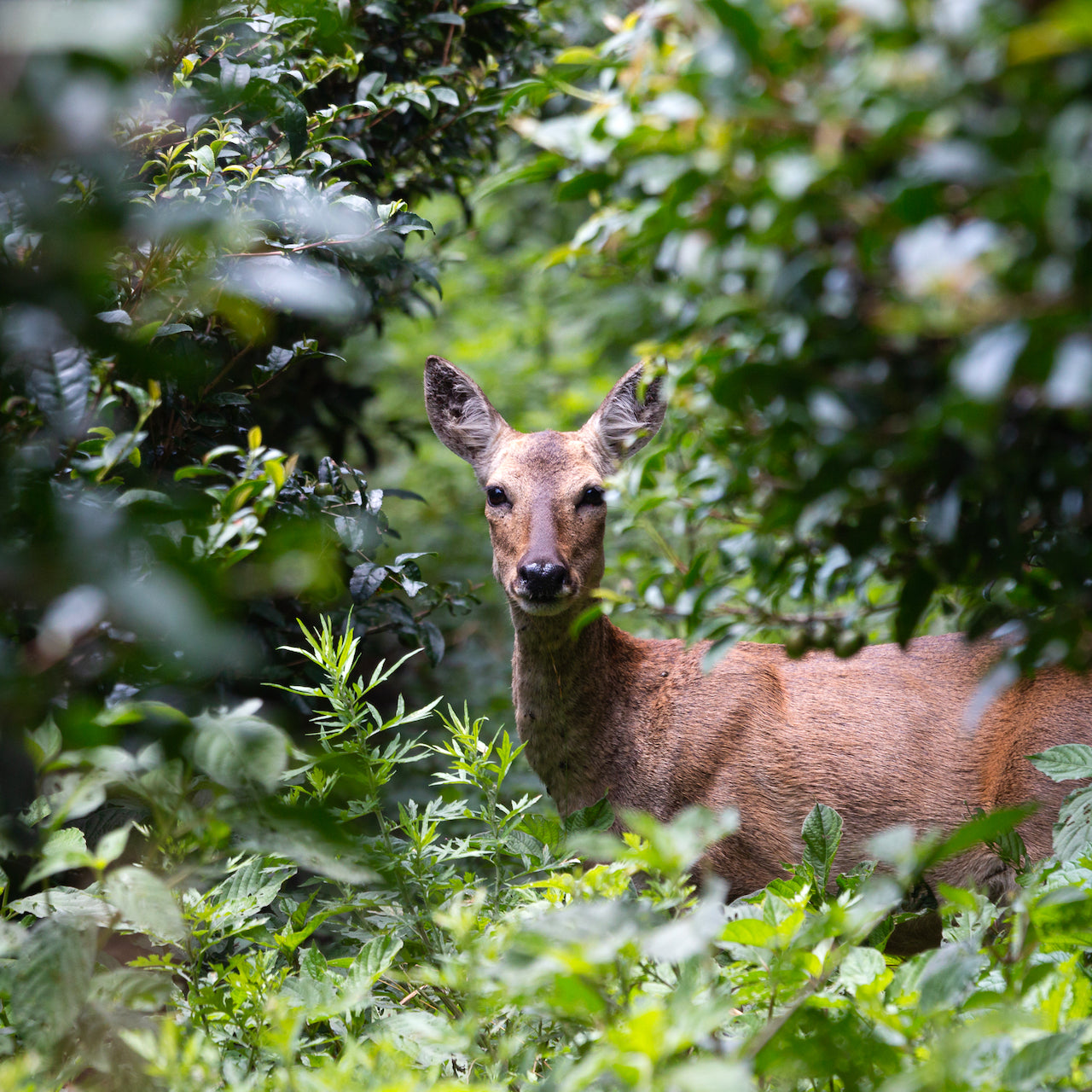
*Photo above: Wild deer among green tea trees and other native plants at Wild Orchard's partner farm.
Wild Orchard teas have been cultivated regeneratively long before the term "regenerative agriculture" came into use. Learning how the green tea trees on our partner farm were planted and grown, we understood how thoroughly they were protected from artificial interference, grew in nourished soil, and were left to nature as much as possible—all under the guidance of farmers who cared deeply about these practices and knew their value. As it turns out, this is the very definition of regenerative agriculture. Our green tea farmers understood that the only way to produce truly good, clean tea was by working with nature at its best.
The site
When the land for Wild Orchard's partner farm was first purchased, it wasn't in ideal condition for planting green tea trees. The soil wasn't suitable for Camellia sinensis to thrive, and the land was covered in weeds and an overwhelming number of huge rocks, making planting new tea trees a challenging project. But the farmers saw that the island itself was an incredible environment, with its clean oceanic fog and circulating winds, frequent moderate rainfall, mineral-rich soil from the native volcanic rocks, and abundant wildlife. It was simply a matter of hard work to clear all the rocks and weeds, and then forging ahead with a strong, clear vision.
The seed
When green tea trees are uprooted from their original soil and transplanted into a completely new environment, they can experience shock and struggle to adapt, leaving them weak. Wild Orchard's partner farm began by planting organic seeds harvested from their mainland sister farm. The farmers knew that growing the tea plants from seed was the first essential step in producing the strongest, healthiest plants possible. Because the plants were born on the island, they didn't experience acclimatization shock and also developed deep roots (green tea plants develop much deeper roots when planted directly in the ground from seed, as opposed to plants from transplants). This allowed the trees to better absorb nutrients from the island's rich soil, and their thriving deep root system further enriched the soil.

Perennial force
All Wild Orchard teas come from the Camellia sinensis plant, which is evergreen. This means they grow and flower year after year and even remain green in winter (e.g., pines, junipers, gardenias). Annual plants live for only one season and then die (e.g., peas, wheat, tomatoes). Many diligent farmers who grow annuals each year have found ways to do so without repeated plowing or the use of chemical herbicides. However, perennials naturally don't require annual plowing or herbicides because they are planted only once and live for at least several years (or at least 30 years in the case of tea plants). Because perennials remain rooted, they continuously release carbohydrates into the soil, which are absorbed by the microbiota (except during their one-time annual dormancy). This process results in nutrient-rich soil. At the same time, the above-ground part of the plant covers the topsoil, protecting it from over-exposure to wind, sun, and water, and preventing erosion and nutrient loss (see our latest blog post to learn more). The topsoil on our partner farm is further protected by a variety of wild plants that naturally grow among the tea plants in the fields, and any remaining areas are covered with leftover tea plant material from the harvest, unusable leaves and twigs unsuitable for tea, and seed residue.
Goose grazing
Over time, the tea plants at Wild Orchard were allowed to grow alongside weeds and other wild plants, developing a robust yet synergistic constitution. But during their first four or five years, they needed some protection from being choked out by the weeds. At that time, geese were organically raised near the tea garden. The farmers noticed that as the geese wandered through the tea fields, they ate some of the sprouting weeds while leaving the green tea plants untouched. This was the beginning of a completely organic, chemical-free solution to their weed problem. The geese would also leave droppings as they wandered and grazed, naturally fertilizing the soil!

As the tea plants continued to thrive among weeds, native plants, other evergreen trees, and geese, the soil became significantly richer and healthier. This attracted even more organic life, such as harmless insects (coincidentally, the tea plants never had a pest problem) and native wildlife like herons, hawks, deer, rabbits, lizards, and many more, each contributing to and benefiting from the growing ecosystem.

Untouched for 20 years
Our partner farmers began their island green tea journey with more challenges and questions than answers. Perhaps the most significant and difficult challenge was that once planted and growing, the green tea seeds had to remain largely undisturbed for as long as possible, which meant minimal production and income. This turned out to be 20 years. During this time, they produced only a very small amount of green tea for sale, just enough to keep the operation running while they continued to plant more seeds and grow more tea plants. Their work focused on protecting and preserving the green tea trees, rather than adding artificial inputs to maximize production. In other words, the farmers dedicated themselves to cultivating the purest, healthiest tea they could achieve by protecting the environment of the green tea trees and refraining from interfering with nature.
Today the tea plants continue to thrive, and many of them are now very large and lush, forming a kind of "green tea forest".
Since the farm's inception, there has been no artificial irrigation system, as the green tea trees are fully and abundantly irrigated by the island's natural rainfall and the constant mist from the surrounding ocean. Wild native animals and insects are regularly seen in the Wild Orchard green tea fields, which our partner farmers continue to share with us through photos, video clips, and stories. When Wild Orchard Green Tea was established as its exclusive international distributor, we knew we needed a name that simply and accurately reflected what makes this tea so special: that it is not only grown according to the strictest organic standards but also left to nature for decades until, in a word, it went wild.

Wild silvergrass growing among the green tea trees on Wild Orchard's partner tea plantation
Whether a farm is just taking its first steps or is further along on the regenerative journey, it all contributes to the larger effort to grow food that is truly healthy and nourishing and helps regenerate the earth from the damage it has suffered. And we believe there is always room for improvement. Wild Orchard and our partner farm continue to strive for a better understanding and better practices and welcome opportunities to collaborate with like-minded individuals to improve regenerative organic farming everywhere.
Untouched for 20 years?
If you're still unsure how to assess the value of leaving something to nature for decades, what it can actually achieve, watch this 7-minute video segment narrated by David Attenborough!